
The final whistle blows and your team’s showcase coach list lands in your inbox. Now what?
A list is a start, not an answer. Some of those colleges were there for your athlete. Some were there for someone on the other team. A few stayed ten minutes. The first 48 hours after a showcase are when you turn the list into a plan, while the weekend is still fresh.
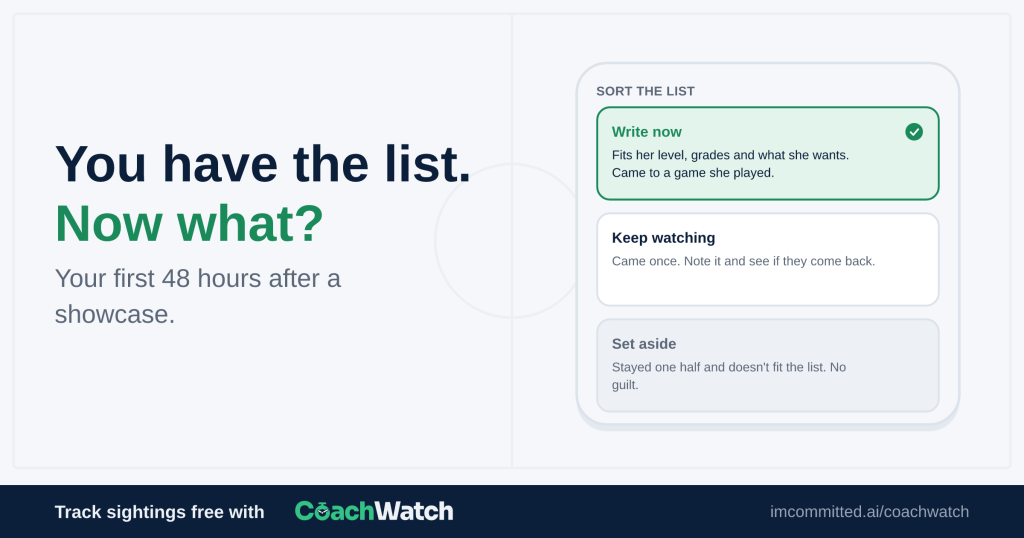
Step 1: Sort the showcase coach list into three piles
- Coaches who came. Colleges your athlete invited that sent a coach to a game. They get a thank-you.
- New targets. Interesting colleges that came to a game without an invitation. They get an introduction, especially if she had a good game in front of them.
- Coaches who didn’t come. Invited colleges that didn’t make it. A school might not be recruiting her year yet, or might not have noticed her emails. They get a short recap.
Step 2: Look for repeat sightings
A college that has now seen your athlete twice is worth more attention than one that came once. If you’ve used CoachWatch for a while, you can review the lists. If you haven’t, this is the weekend to start (four parents, two per half, one list shows how).
Many coaches say they want to see an athlete at least three times before deciding, some want one of those to be on campus, and many want more than one member of the staff to see her. One game can be unusually good. Two coaches can read the same player differently. And coaches want to see how she acts when things go well and when they don’t (that’s why a coach’s third look matters).
Step 3: Let your athlete write in her own voice
This is the part that matters most. The follow-up is hers: a thank-you, one specific moment from the weekend, a recap of the results. Parents can sort the list, but coaches want to hear from the player.
Sit down with her while the games are fresh. Ask which coaches she noticed and what she wants to say. She writes the first draft. You check the spelling and the coach’s name. Keep it to three parts: a thank-you, one specific moment from the game, and one clear next step.
Step 4: Don’t over-read it
A sighting is a signal, not a guarantee of interest (see what it means when a coach watches). Keep the first email short and the expectations lower than your hopes. A coach may reply quickly, slowly or not at all, and none of those tells you much on its own. The five recruiting signals worth tracking explains how to read replies, calls, visits and silence together.
Following up with coaches
- Day one: Sort the list into the three piles and mark any college that has now come more than once.
- Day two: Your athlete writes to the “Coaches who came” pile, one personal email per coach.
- The rest of the week: Send introductions to the new targets, and a short recap of the weekend to invited coaches who didn’t make it, with a promise to send the next schedule.
What if the list is short?
A short list is not a bad sign. Some games draw several coaches and some draw none, and a coach can’t be everywhere. Keep playing, keep a record, and send a short update when there’s something real to share: a new schedule, a big win, semester grades.
Rules about when and how coaches can respond to families depend on the level and the date. Before you read anything into a reply, or a lack of one, check the NCAA’s official recruiting page and the governing body for your athlete’s level.
The list comes from CoachWatch. Get the free Android beta.
Sorting a list and writing the right email for each coach takes real time. That’s the work I’mCommitted.ai is built to take off your plate.