
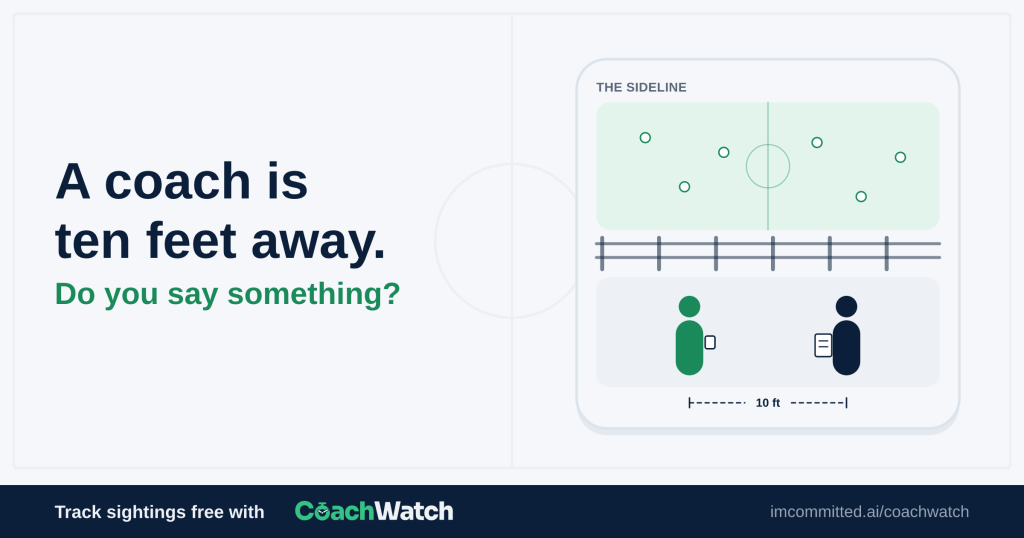
A coach is standing ten feet away. You have a hundred things to say. Should you talk to a college coach at a game?
The honest answer is usually: not the way you’re picturing.
What parents can usually do
- A short, friendly hello is fine. Introduce yourself, say your athlete’s name and the team, and let the coach lead.
- Be easy to walk away from. A coach is working, and a game is not a meeting.
What to expect back
A coach may be brief, or may say very little. That isn’t rudeness. Rules limit what coaches can say to families at certain times, and those limits depend on the level and the date. The NCAA’s official recruiting page is the place to check, not a rumor from another parent.
What to avoid
- A sales pitch for your athlete
- Interrupting a coach who is watching a game
- Asking where your athlete stands
- Following a coach to the parking lot, or to the next field
- Anything that puts your athlete in an awkward spot
What helps more than talking to a coach at the game
- Your athlete reaching out to them. The athlete’s own email is stronger than a parent’s chat at the fence.
- Tracking which coaches watched the game. Having the list means her email can be specific (what to do with the coach list).
- Be a good family. Coaches notice how families behave (showcase weekend etiquette).
The fact of the matter is that there is very little a parent can do at the fence to help, and a lot you can do to hurt. Nearly every coach can tell a story about walking away from a player because of her parents, or at least one they wish they had.
What if the coach talks to you first?
Be friendly and short. Say thank you for coming, say your athlete’s name and number if asked, and let your athlete handle the follow-up. If the coach asks a question you aren’t sure about, it’s fine to say “I don’t know. I’ll ask her to send you an email.” That’s a good answer, and it keeps the conversation where it belongs.
What if you’re tempted to say more?
That’s normal. Every parent has a speech ready. Write it down, give it to your athlete, and let her turn it into a short email in her own words. She’ll say it better, and the coach will believe it more.
Why this matters for you
The sideline feels like your best chance. It usually isn’t. Your best chance is a good email afterward, written by your athlete, about one real moment from the game. Coaches can tell when a parent wrote it, and they can tell when a parent worked the fence.
What to say if you do talk
Keep it to two sentences. Something like: “Hi Coach, I’m [Name], [athlete’s name]’s parent. Thanks for coming out. She’s number [#] in the [color] jerseys, and she’ll follow up with you herself.” Then smile, step back and go back to watching the game.
What not to read into the conversation
A friendly coach isn’t a promise, and a brief coach isn’t a no. Treat any conversation as one data point, and give it the same weight you’d give a sighting: real, but small. What you do afterward matters more than what happened at the fence.
After the game
- Write down the coach’s name, school and which game it was.
- Tell your athlete, and let her decide what to write.
- Don’t send a parent email on top of hers.
Skip the awkward sideline moment, and know who came. Get the free CoachWatch Android beta.
The next step is hers. I’mCommitted.ai, the recruiting app we’re building, helps your athlete write it.